
Rangoli Designs — 100+ Easy Flower, Dot & Competition Patterns for Diwali 2026
Rangoli designs are colorful floor patterns drawn at the entrance of Indian homes using rice powder, colored sand, flower petals, or dry pigments to welcome guests and invite good fortune. Whether you’re looking for easy rangoli designs for home, flower rangoli for Diwali, dot rangoli kolam patterns, or bold designs for competition, this guide covers 100+ styles with step-by-step tutorials for beginners and experienced artists alike
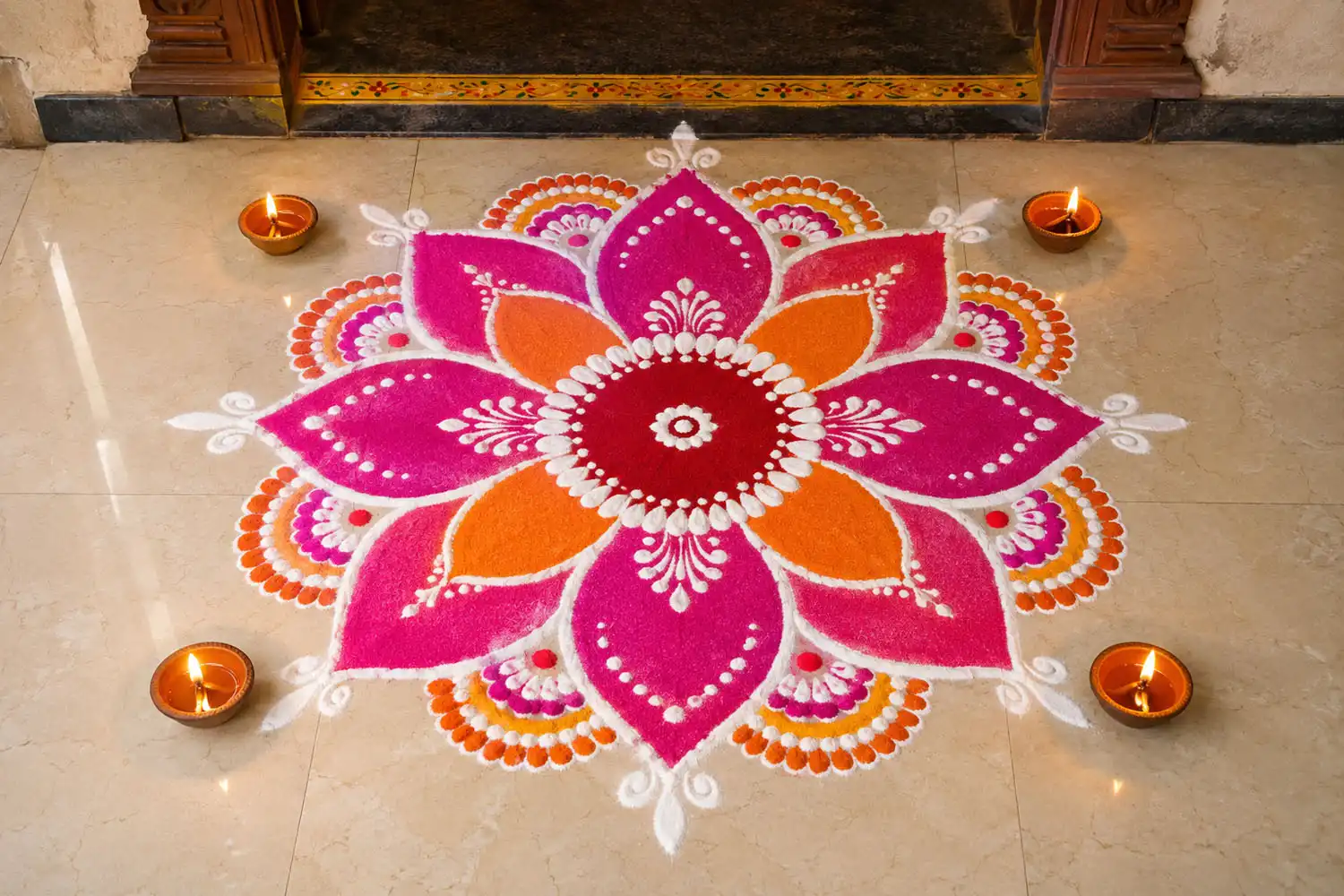
Rooted in centuries of tradition, rangoli is made fresh each day or before festivals. Patterns range from small dot grids to large freehand creations with flowers, peacocks, and lamps. Families draw them at doorways during Diwali, Pongal, weddings, and daily prayers to bring blessings and color to the home.
History and Origin of Rangoli
Rangoli has been part of Indian life for over a thousand years. The word comes from the Sanskrit rangavalli, which means a row of colors. Ancient texts such as the Chitralakshana, one of the earliest works on Indian painting, describe floor art used for worship and welcome.
Every region shapes the tradition in its own way. In Tamil Nadu it is called kolam, in Andhra Pradesh muggu, in Bengal alpana, in Bihar aripana, in Rajasthan mandana, and in Uttar Pradesh chowkpurana. The patterns and materials differ, but the purpose stays the same: a sign of welcome and a prayer for prosperity.
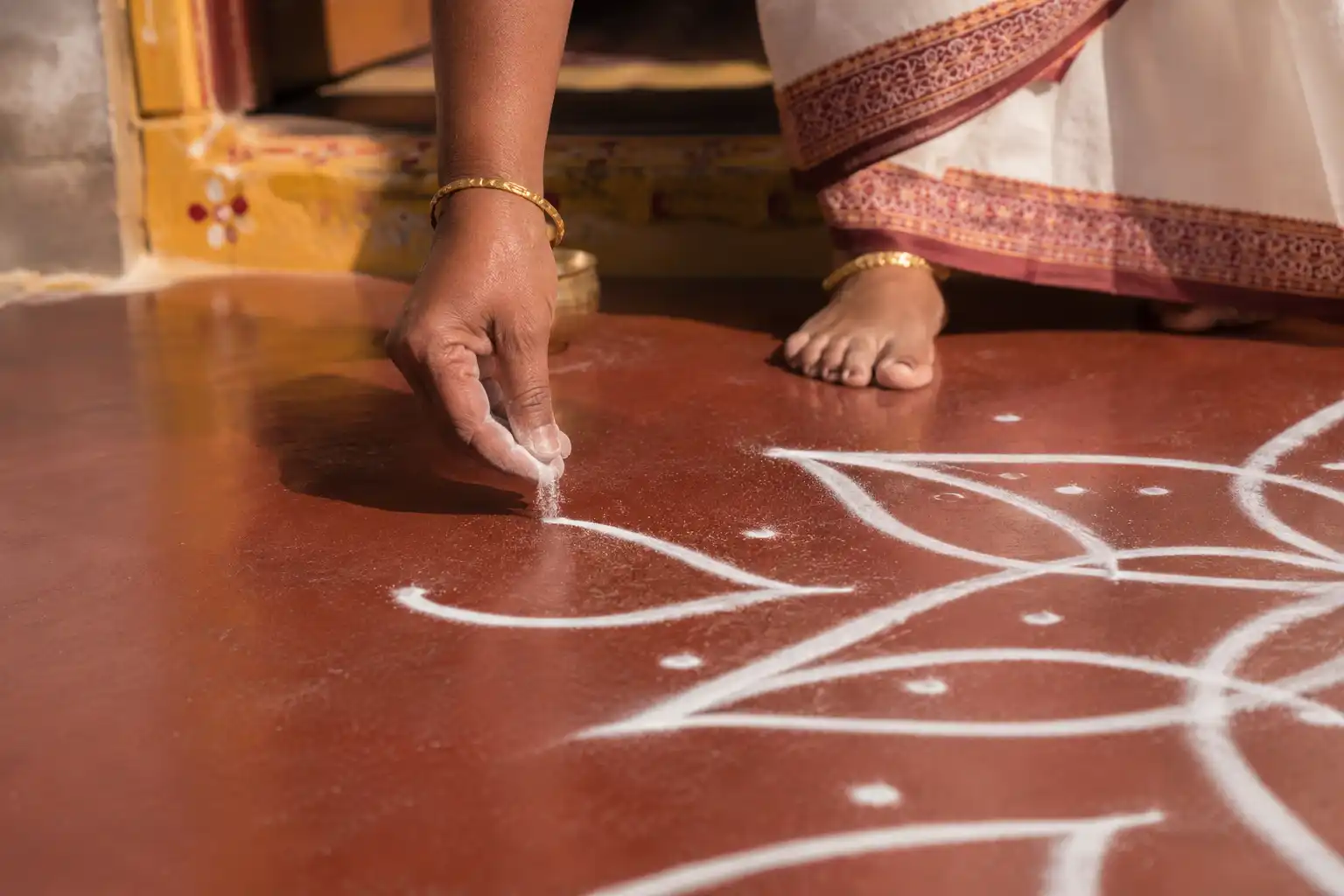
Women traditionally draw fresh rangoli at the entrance of the home each morning. It is offered to Goddess Lakshmi during Diwali, to the sun during Pongal, and to ancestors during shraddha rituals. The art is meant to be temporary, swept away and made new the next day.
Rangoli Designs Styles
Rangoli has grown into many distinct styles over the years. Some follow strict geometry. Others flow freehand with flowers and motifs. Below are ten popular styles you will find across India, each with three example designs.
Geometric Rangoli
Geometric rangoli uses straight lines, triangles, squares, and circles arranged in strict symmetry. The style is beginner-friendly because the shapes guide your hand and corrections are easy to make.
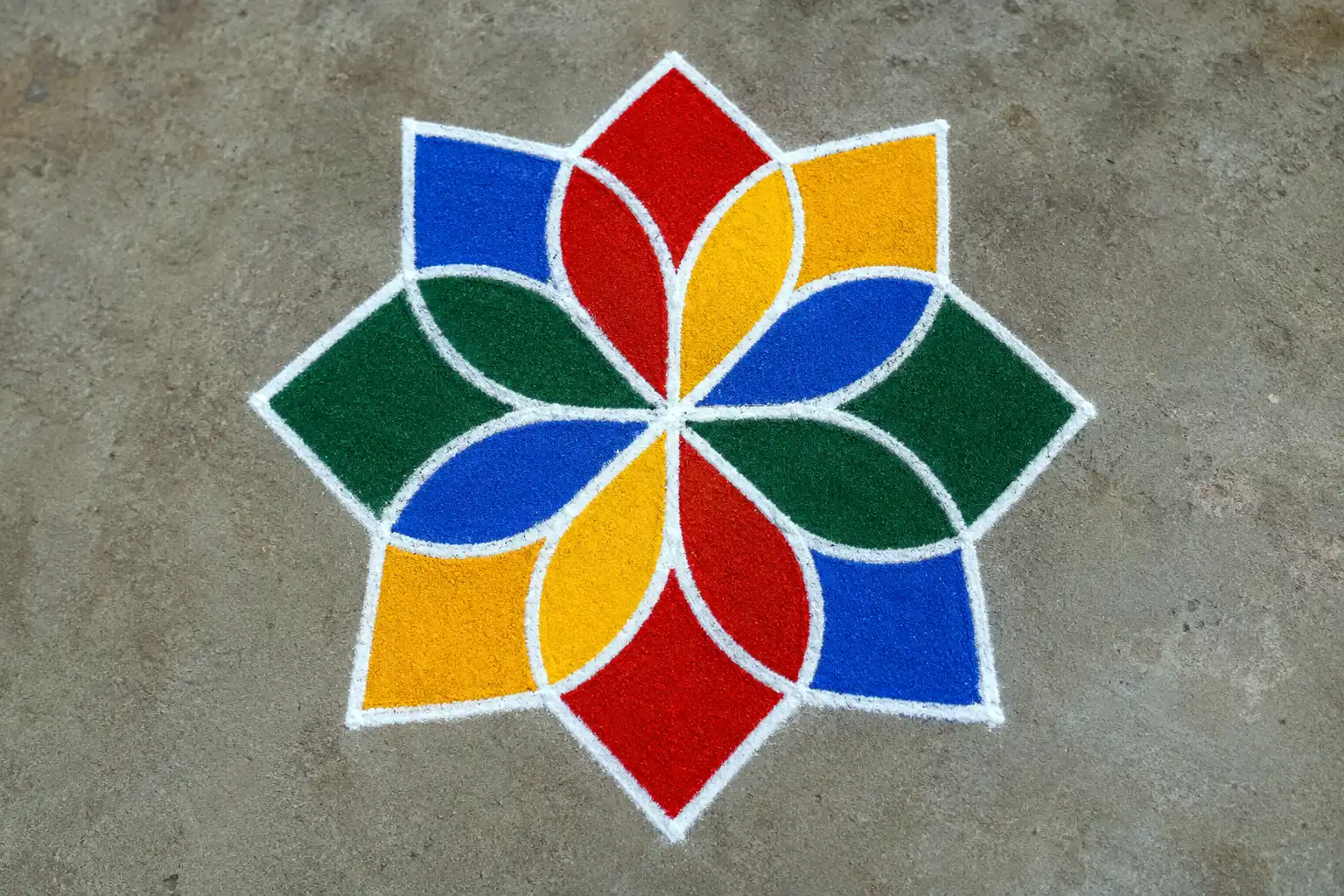
Geometric Rangoli
Squares stacked at angles form an eight-point star. Four bold colors fill the petals. Best drawn in a three-by-three foot space at the doorway
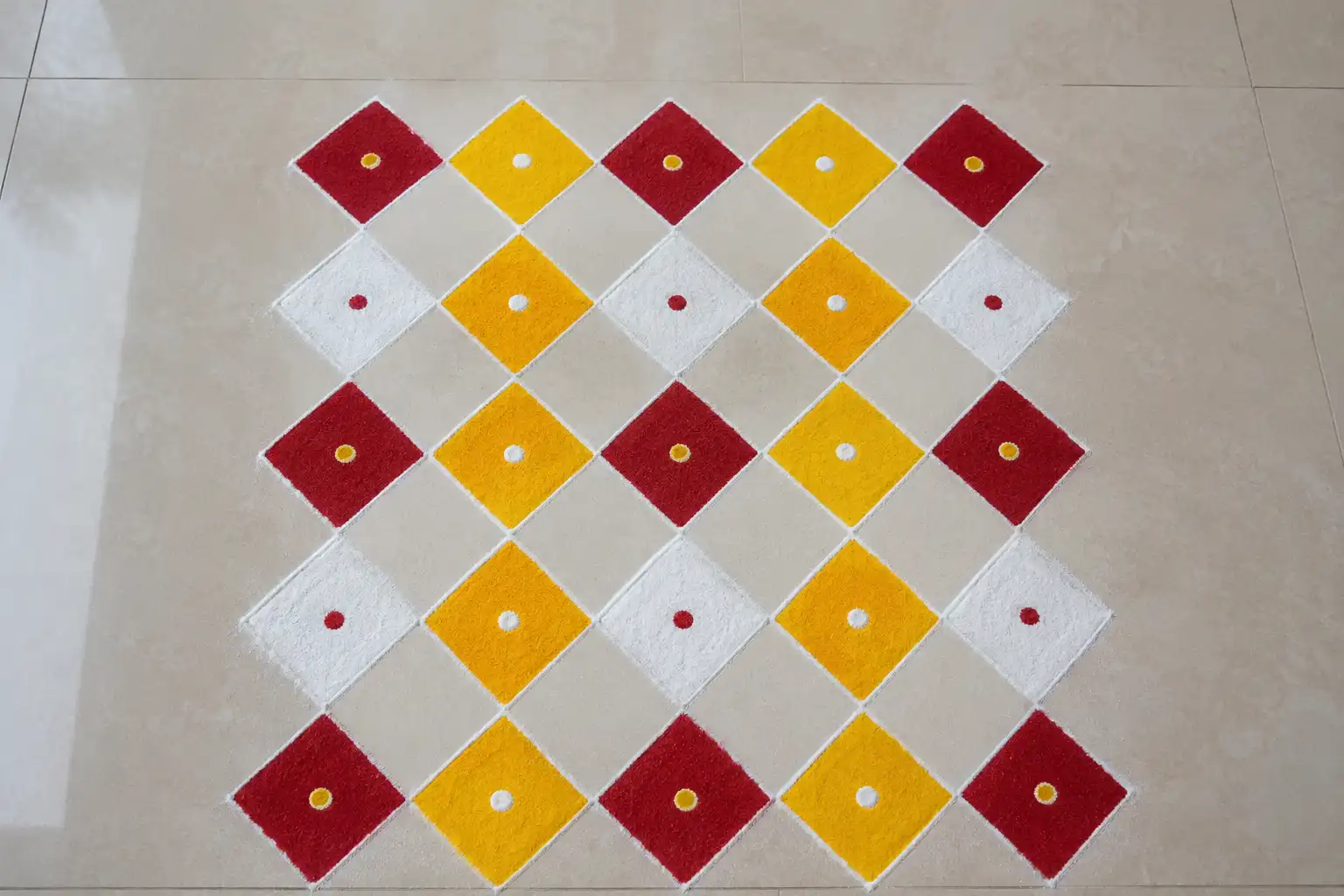
Diamond Grid Pattern
A grid of diamonds in red, yellow, and white. Small dots fill each cell for texture. Clean lines and clear repetition make it easy to copy.
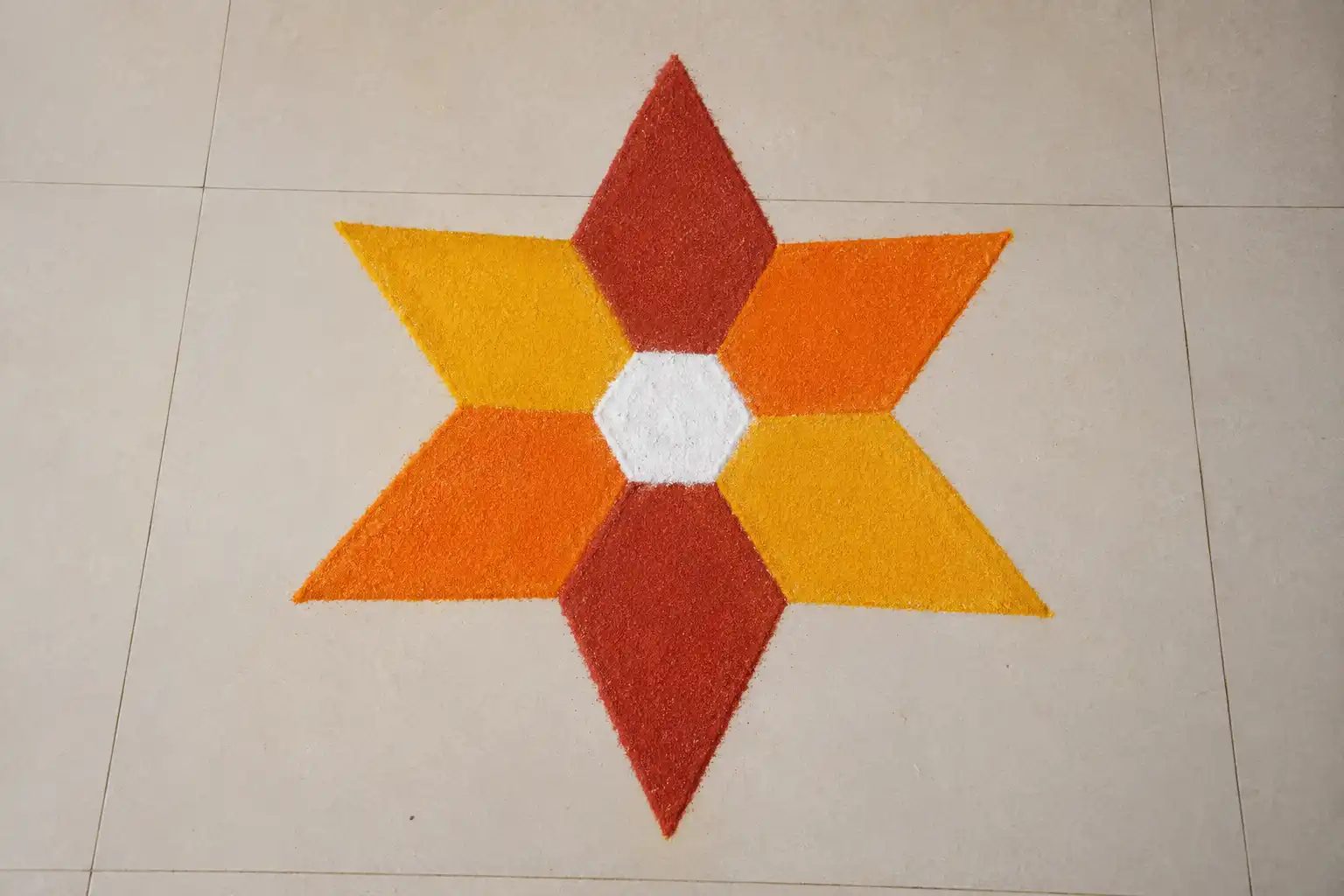
Hexagon Burst
A central hexagon ringed by six pointed petals. Alternating warm colors give the pattern movement. Quick to draw on small floor space.
Floral Rangoli
Floral rangoli builds the design around flower shapes such as lotus, marigold, rose, and jasmine. It is the most popular festival style and looks lush even without complex tools.
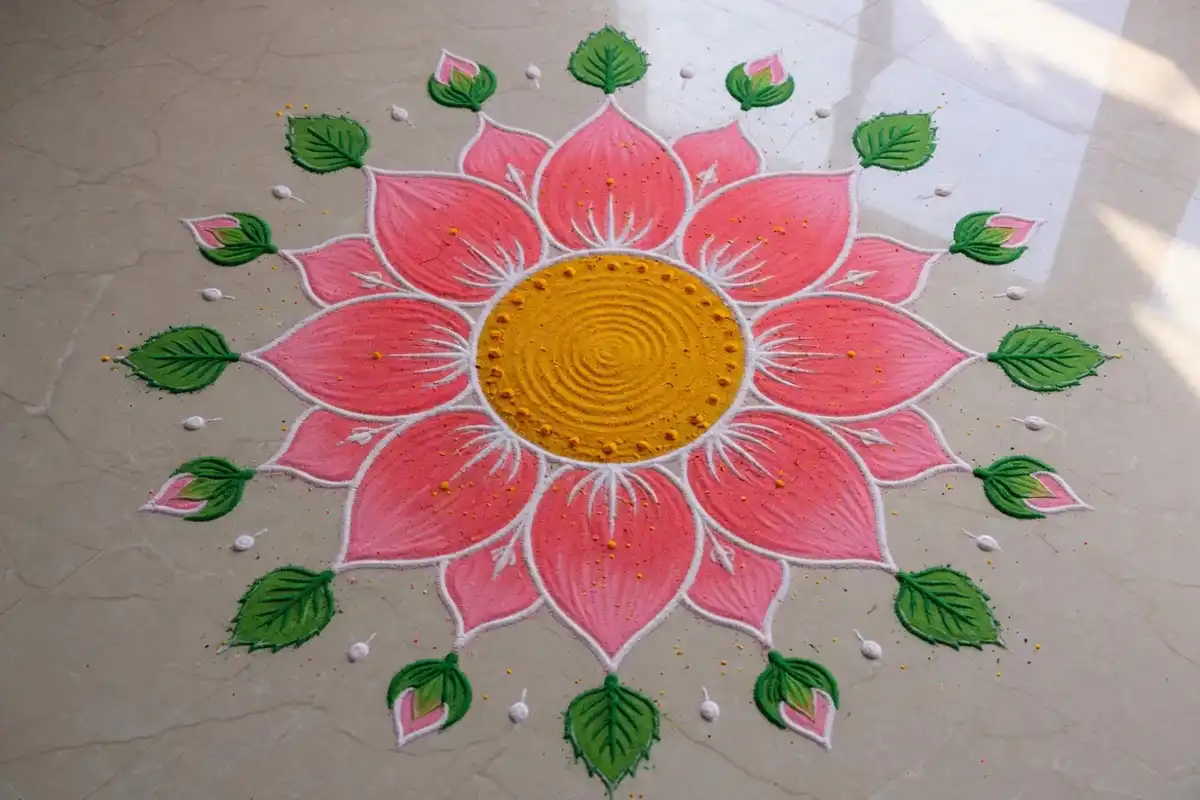
Lotus in Bloom
A central lotus with eight pink petals opens around a yellow seed pod. Green leaves and small buds fill the outer ring for balance.
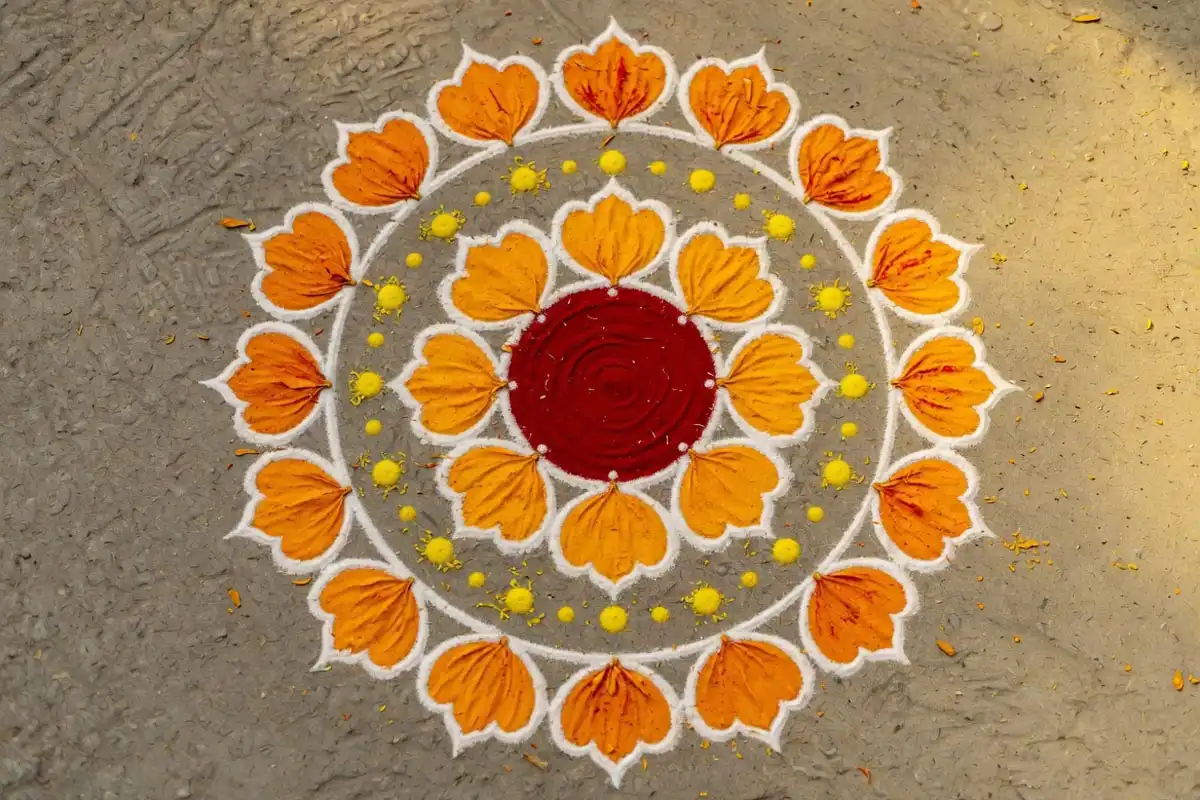
Marigold Wreath
Concentric circles of orange marigold petals frame a deep red center. A favorite design for Dussehra and Diwali entrances.
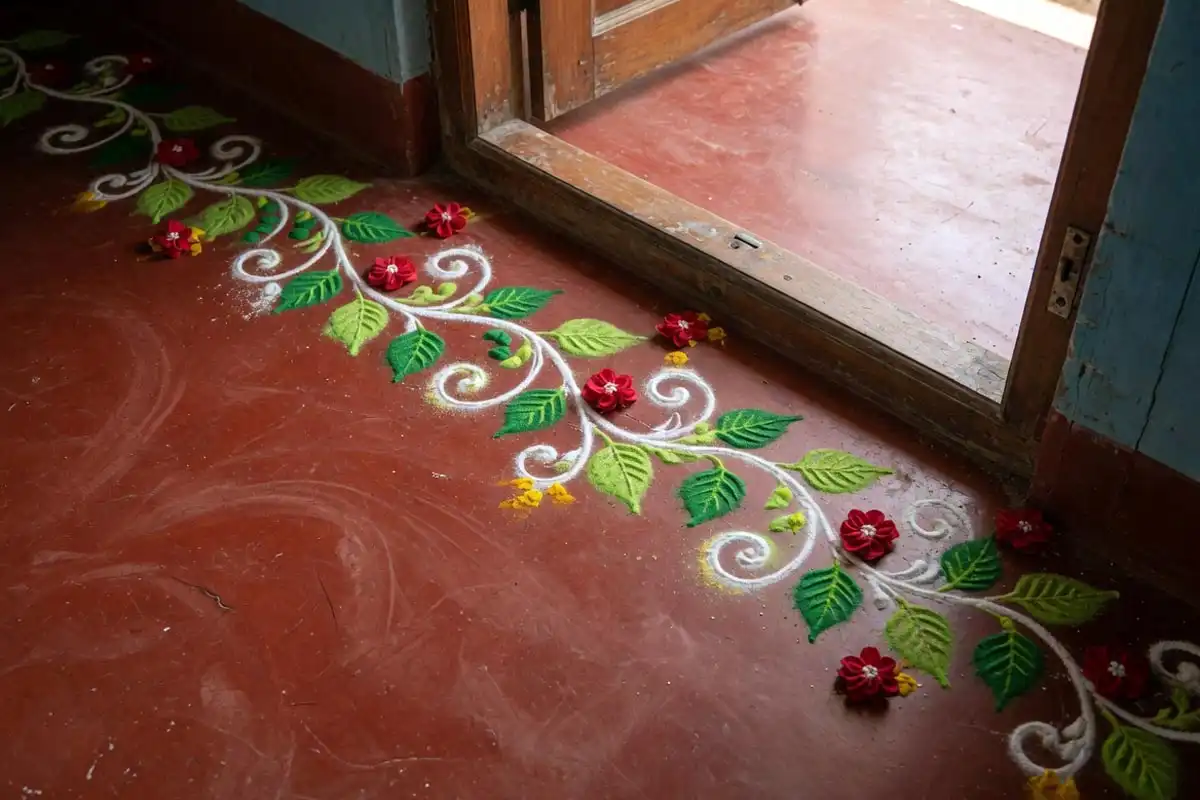
Rose Vine Border
A flowing vine with red roses and green leaves runs along the doorway. Works best as a side or border design rather than a centerpiece.
Peacock Rangoli
The peacock is the national bird of India and a symbol of beauty and grace. Peacock rangoli features curved feathers, eye-shaped plumes, and a bright palette of blue, green, and gold.
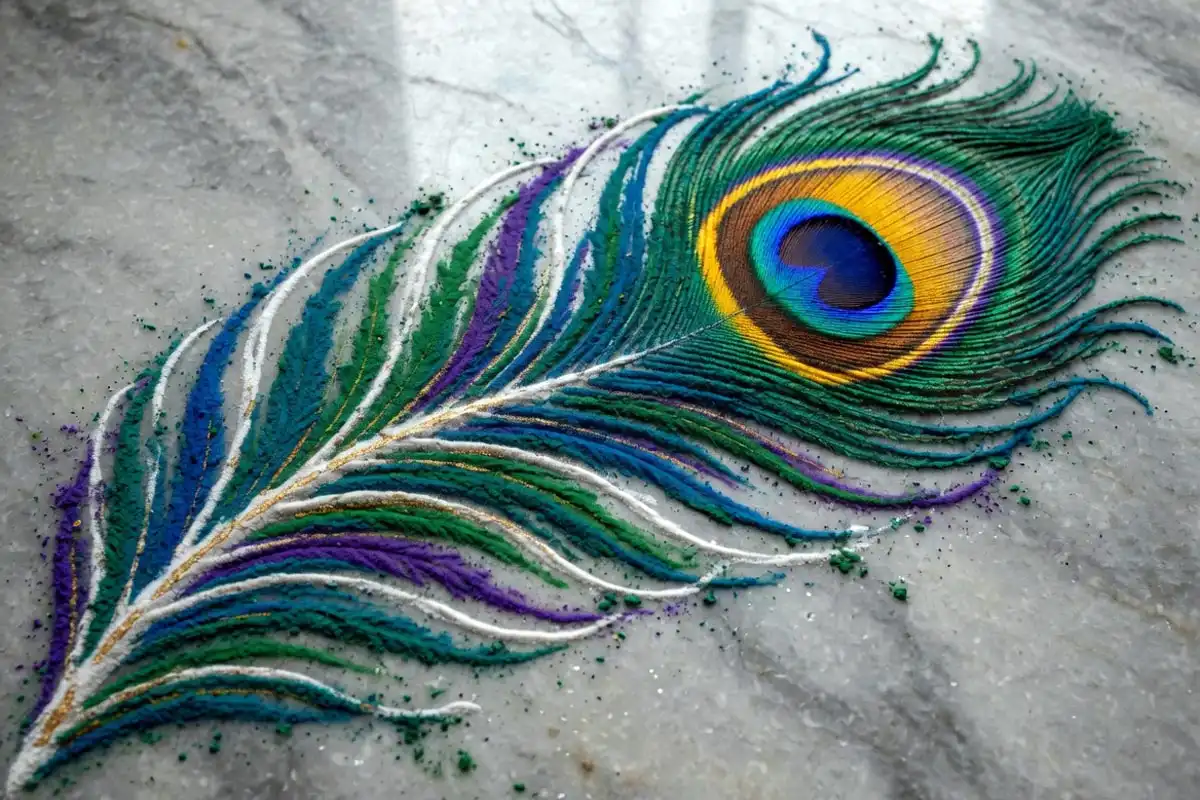
Single Peacock Plume
One large peacock feather curves across the floor. Blue, green, and yellow rings shape the eye at the tip for a striking focal point.
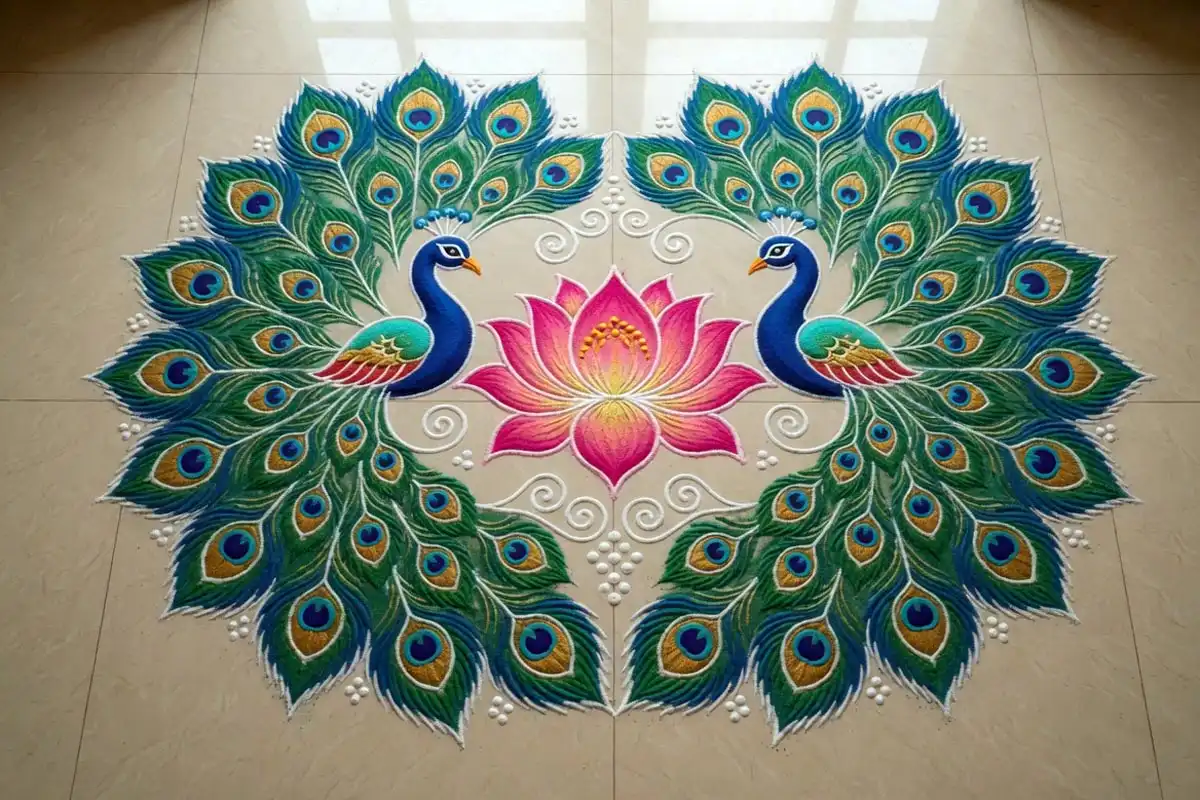
Twin Peacocks
Two peacocks face each other around a central lotus. Their tails open into a fan of color and balance the whole design.
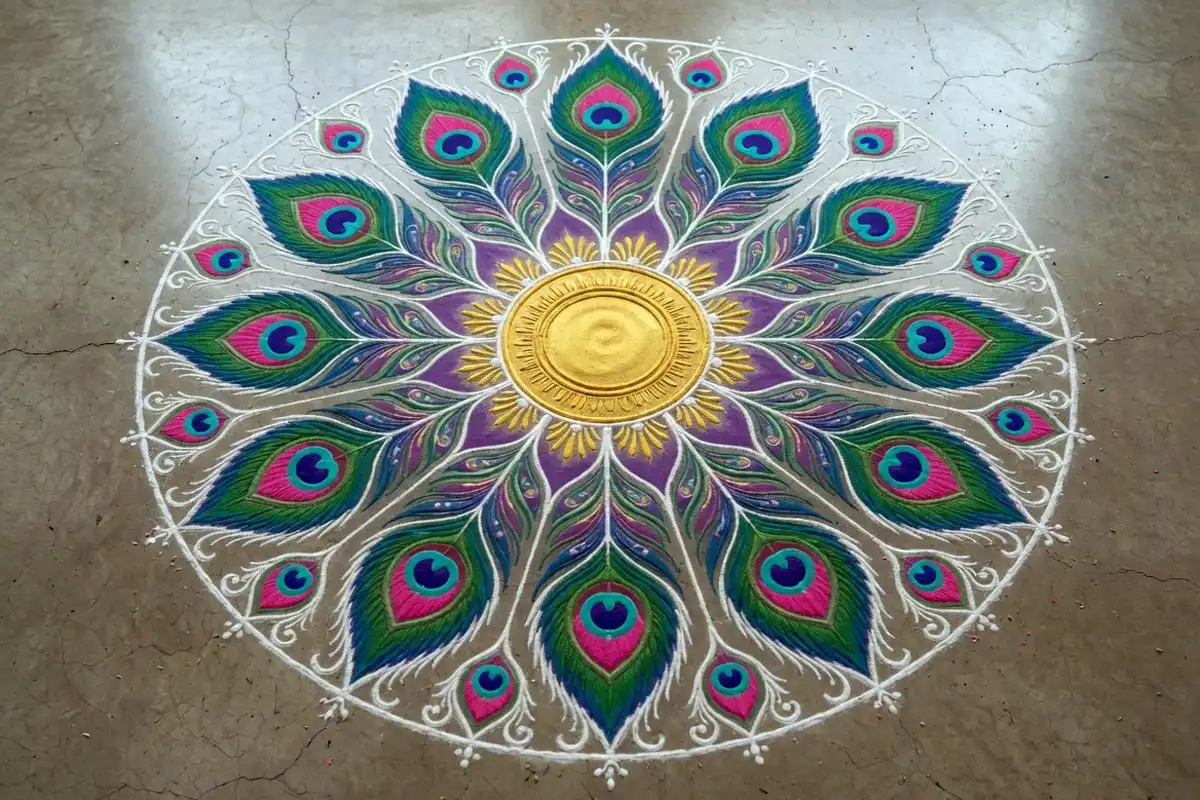
Peacock Mandala
A circle of peacock feathers radiates outward like a sun. Pink and turquoise dominate the palette. Striking on a large floor.
Freehand Rangoli
Freehand rangoli is drawn without dots, grids, or stencils. The artist relies on practice and a steady hand. It is the most flexible style and one of the most expressive.
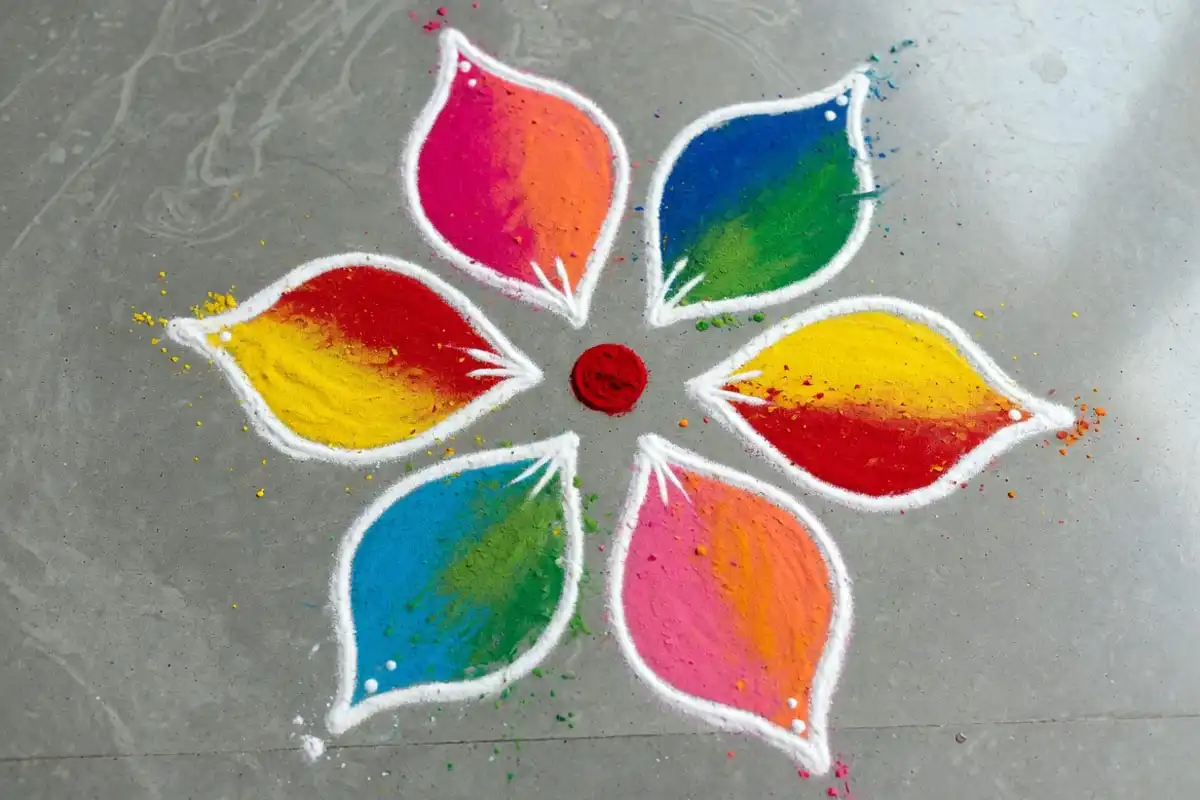
Curved Petal Burst
Six teardrop petals spread from a central dot. Each petal carries a different color blend, finished with crisp white outlines.
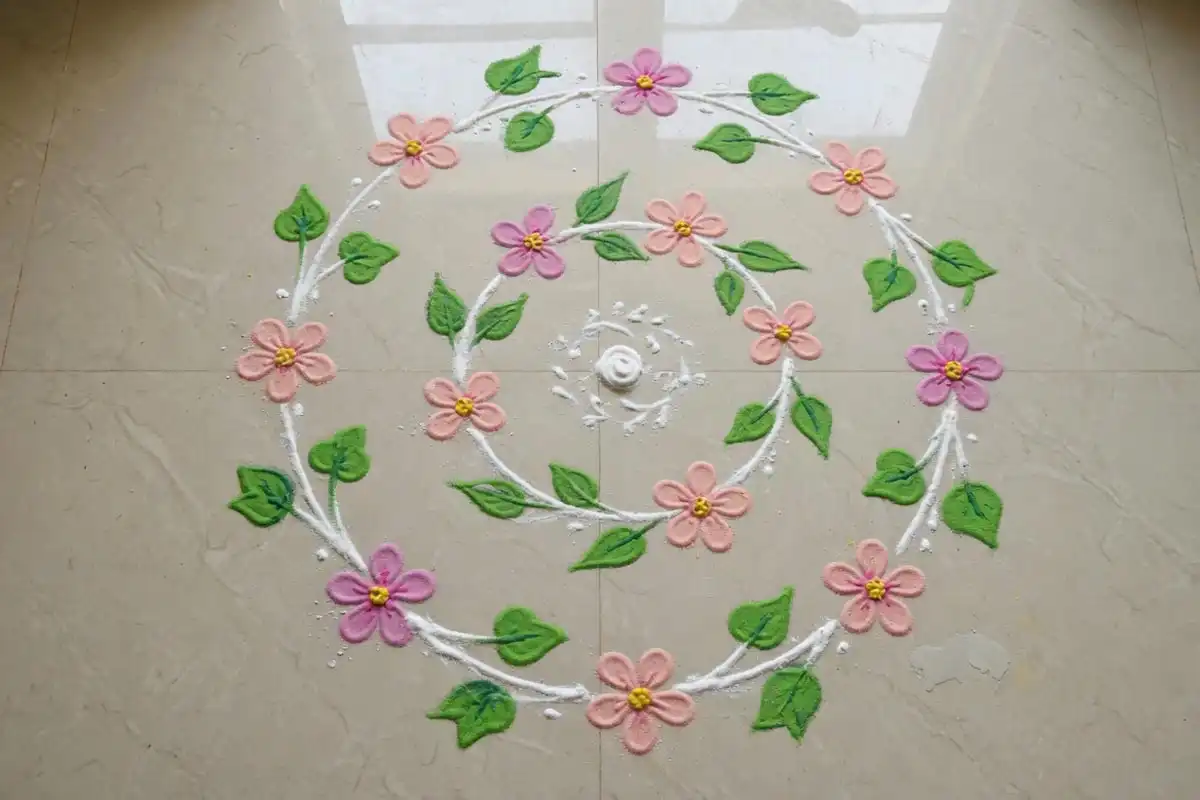
Flowing Vine Spiral
A spiral of vines and leaves winds outward from the center. Pinks and greens dominate the palette. Best suited for confident hands.
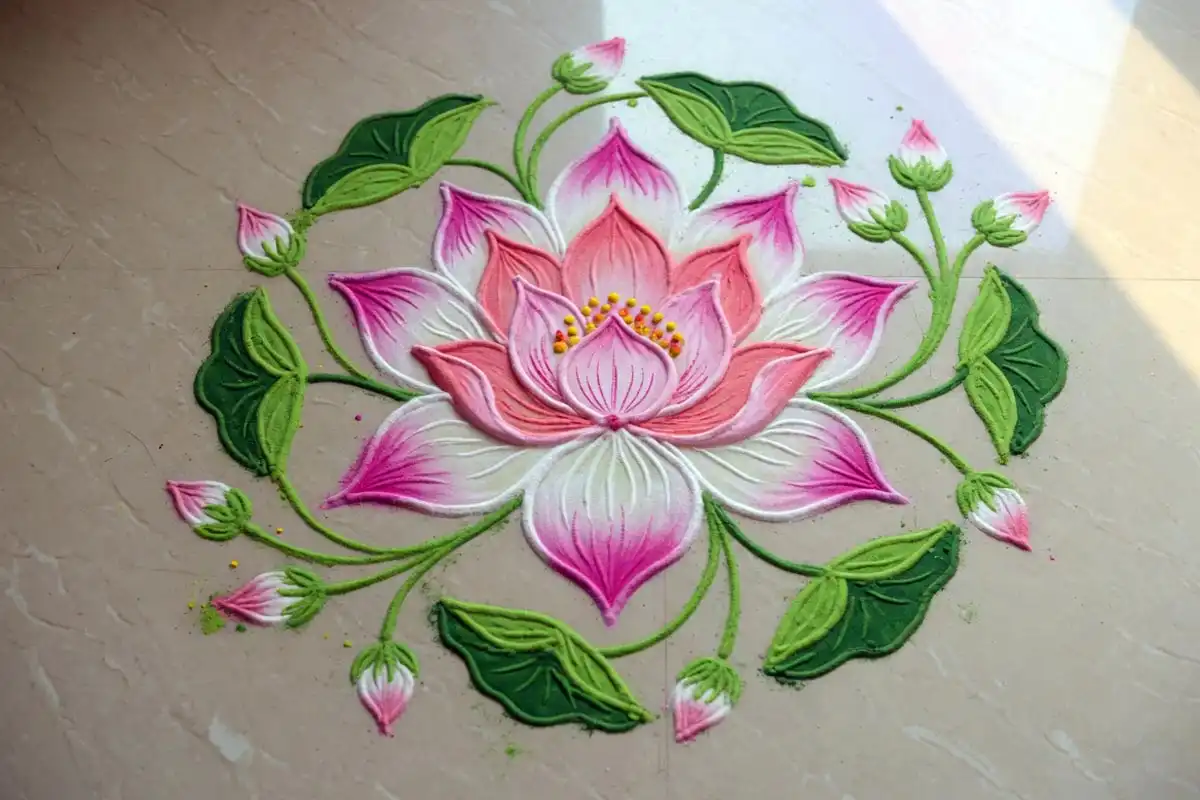
Open Lotus Heart
A wide lotus with layered petals takes the center, surrounded by curved leaves. No grid, just careful spacing and patience.
Dots Rangoli (Kolam Style)
Dot rangoli starts with a grid of small dots. You then connect them with lines or curves to form patterns. The kolam tradition of Tamil Nadu uses this method daily.
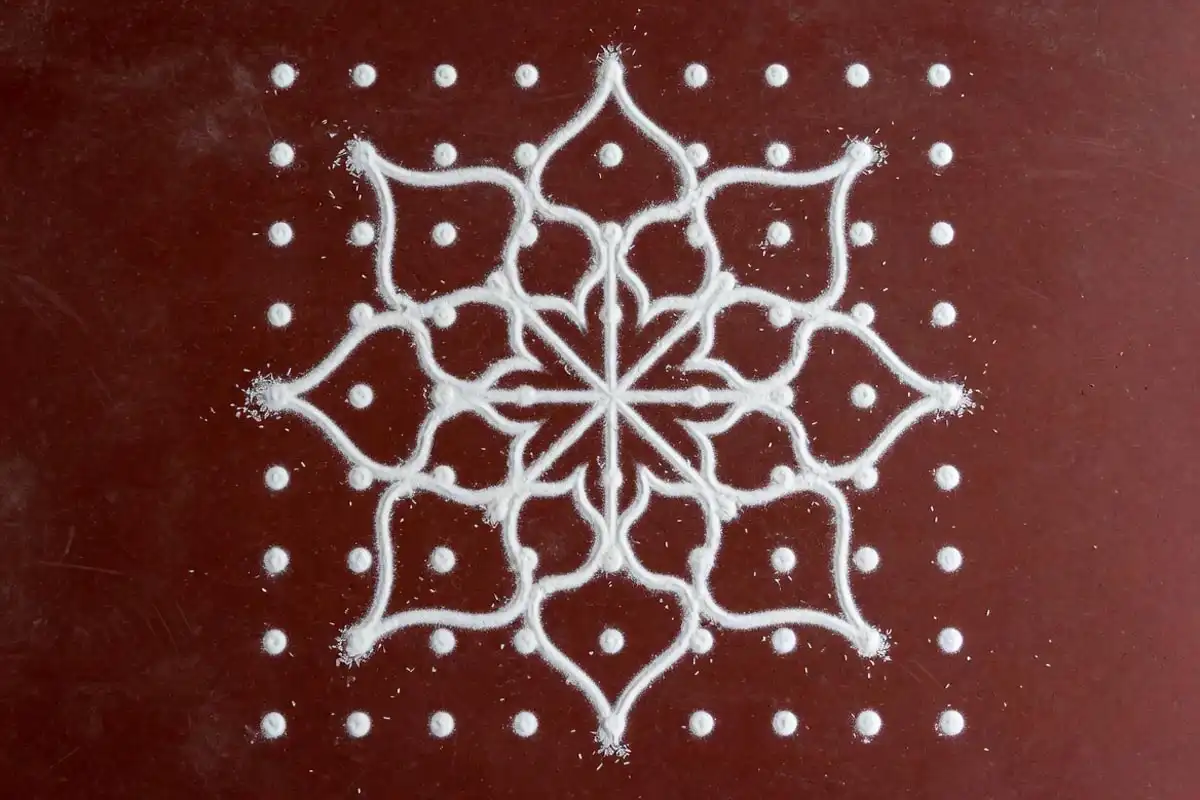
9×9 Grid Star
An odd-numbered dot grid is joined by curves to form an eight-point star at the center. Crisp white lines on a dark floor.
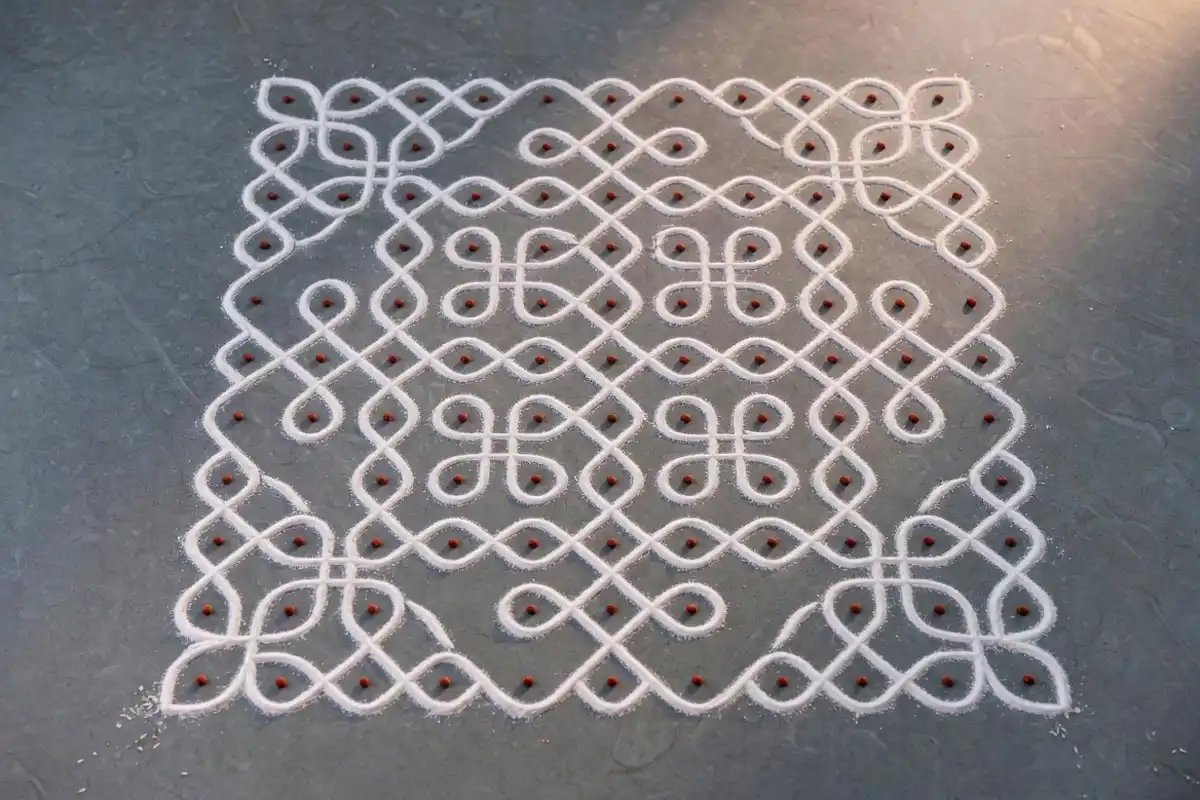
Pulli Kolam Loops
Continuous looped lines weave around the dots without lifting the hand. A clean, meditative pattern from the Tamil tradition.
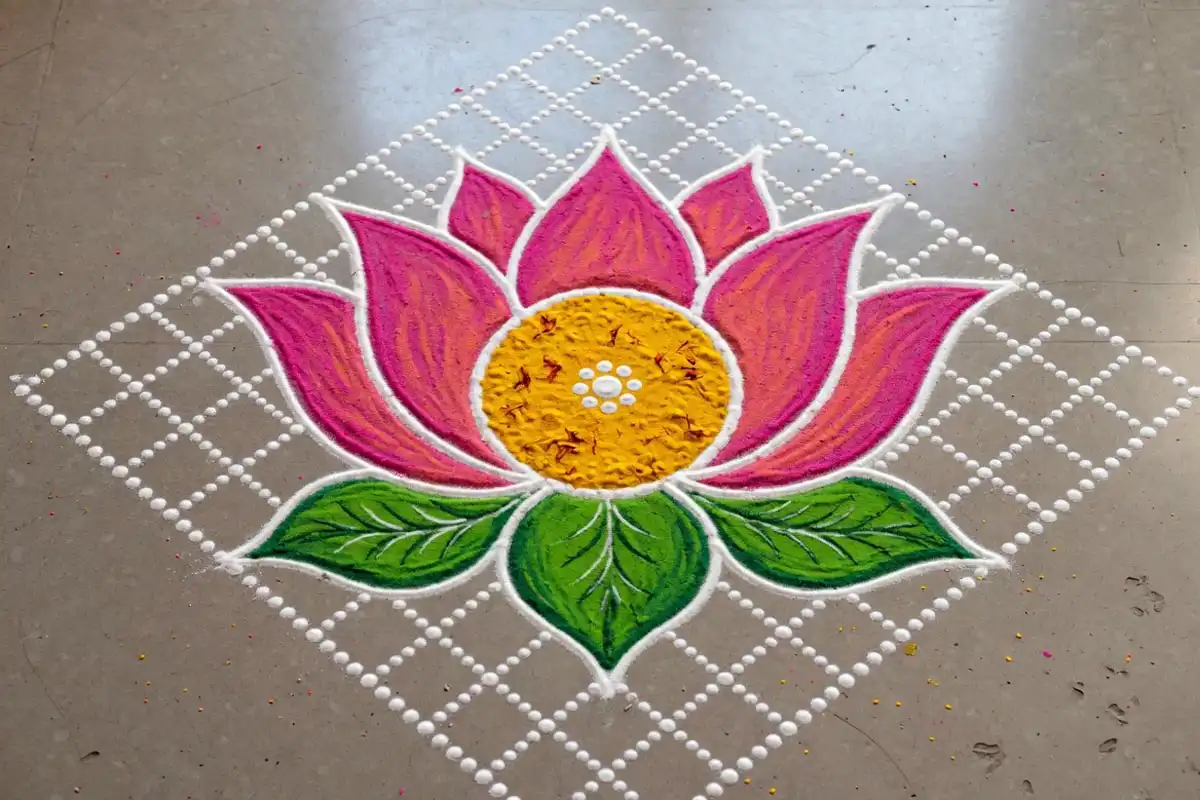
Dot Lotus
A diamond grid of dots is connected to draw a closed lotus shape. Filled with pink and yellow for a festival-ready finish.
3D Rangoli
3D rangoli uses shading and color gradients to create the illusion of depth. With careful blending, flat floor patterns appear to rise off the ground.
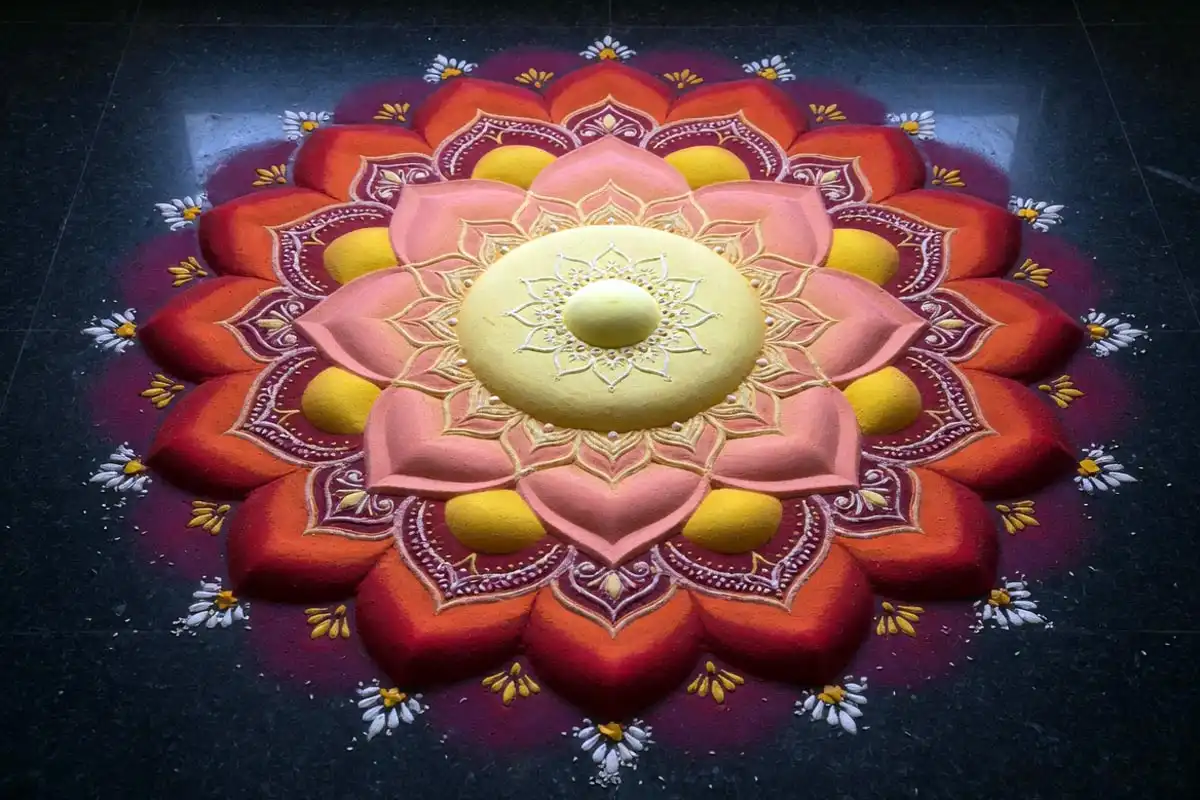
3D Globe Mandala
A sphere effect built with light to dark color gradients. The center appears raised. Best photographed from straight above.
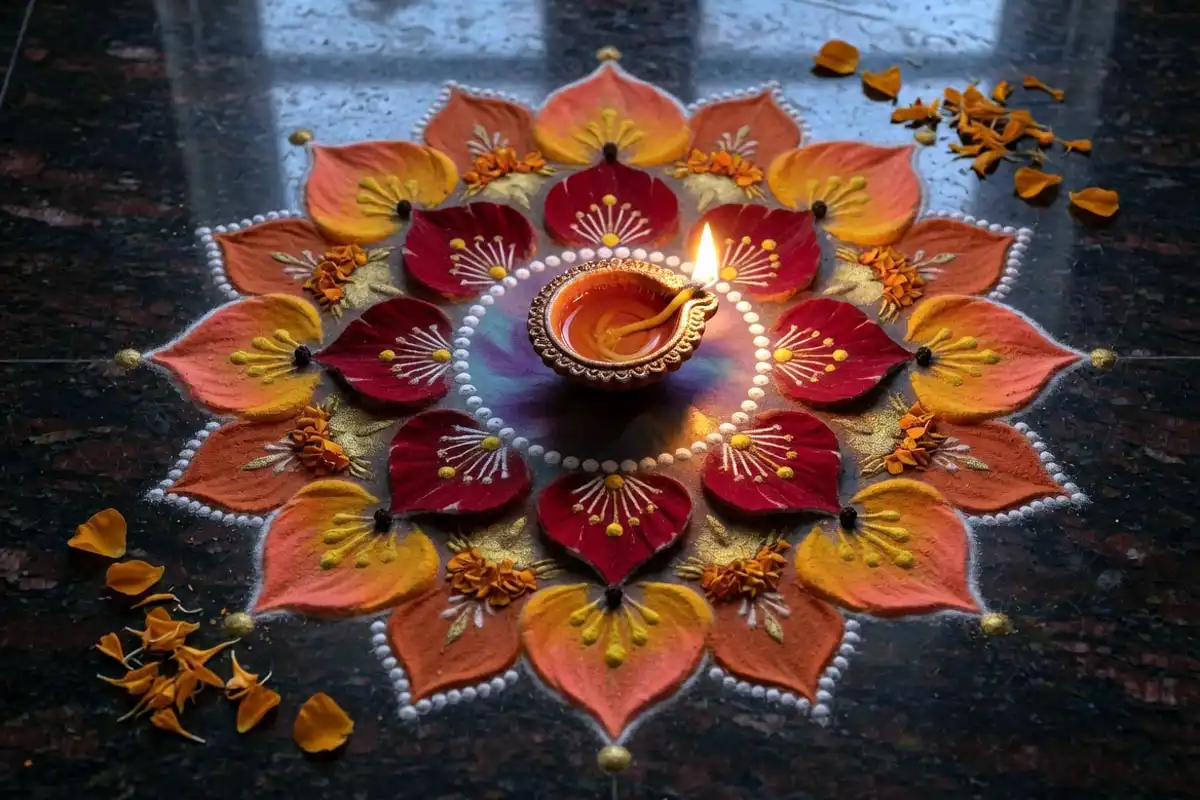
Floating Diya
A clay lamp appears to float above the rangoli through soft shadow work. A popular Diwali centerpiece that photographs beautifully.
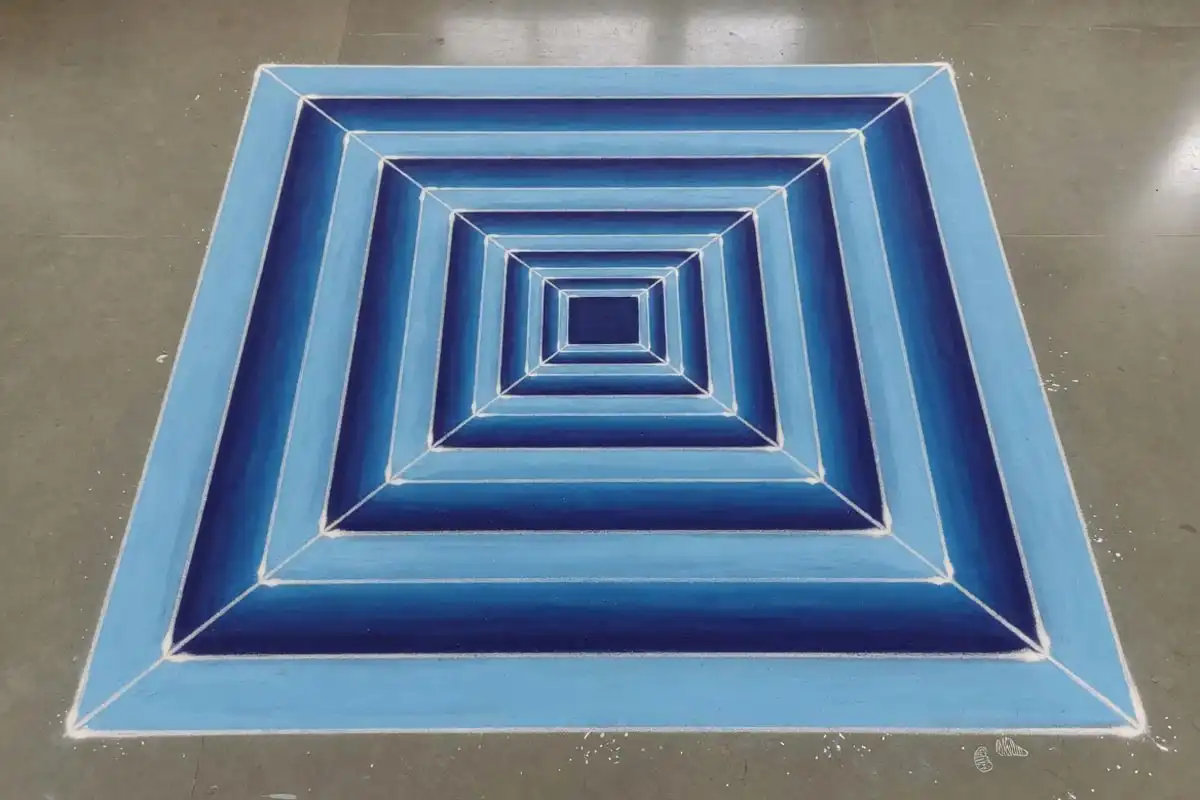
Stepped Pyramid
Stacked squares fade from light to dark, creating a pyramid illusion. Striking on plain cement or tile floors.
Diwali Rangoli with Diyas
Diwali rangoli combines floor patterns with lit clay lamps called diyas. The lamps sit inside the rangoli to add warm light and depth. It is the most photographed style each year.
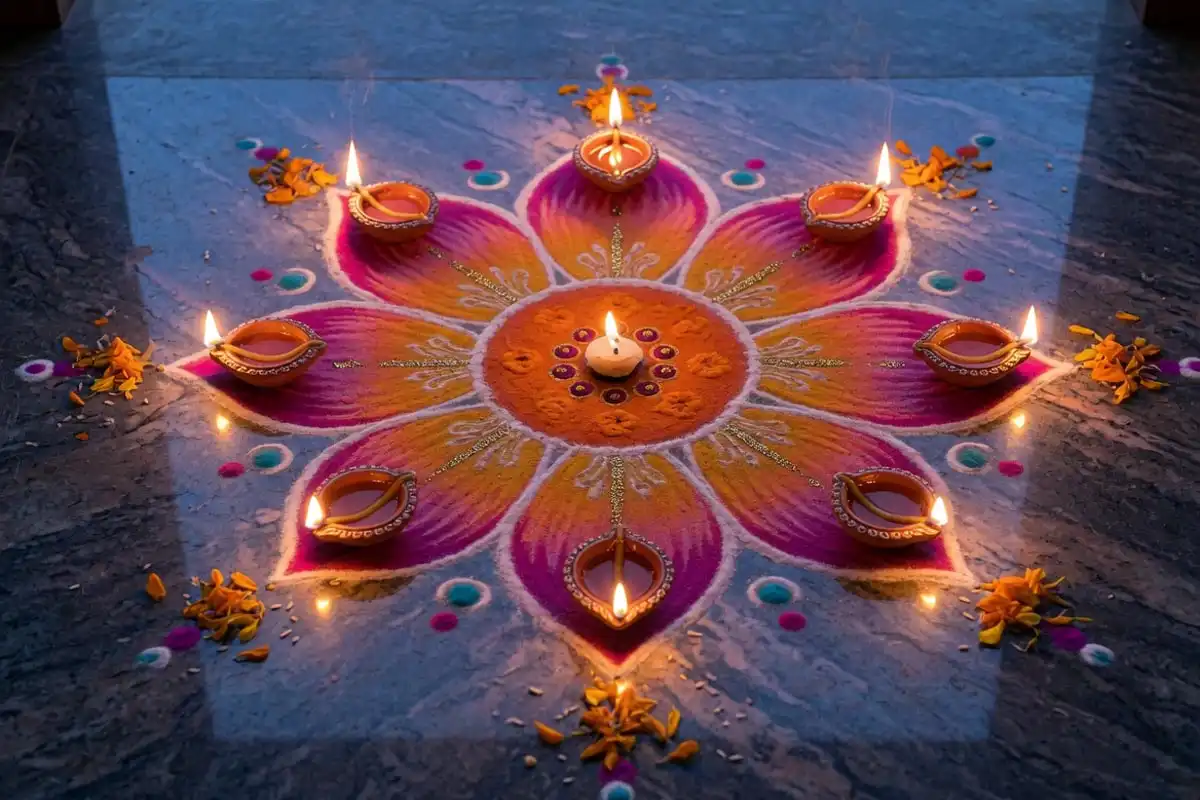
Lamp Ringed Lotus
A central lotus is surrounded by a ring of small diyas. The lights mark each petal tip and glow beautifully at night.
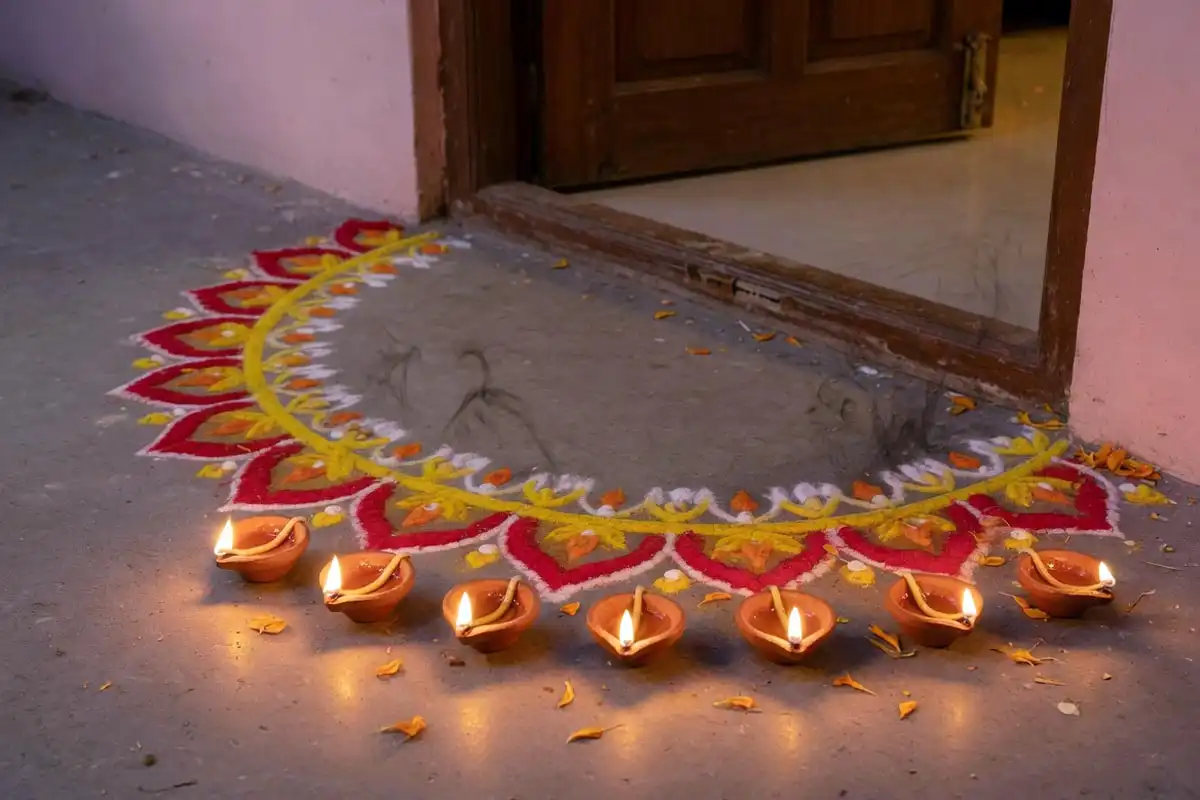
Doorway Diya Line
A simple rangoli border with diyas placed along the threshold. Easy to set up and warm with welcome.
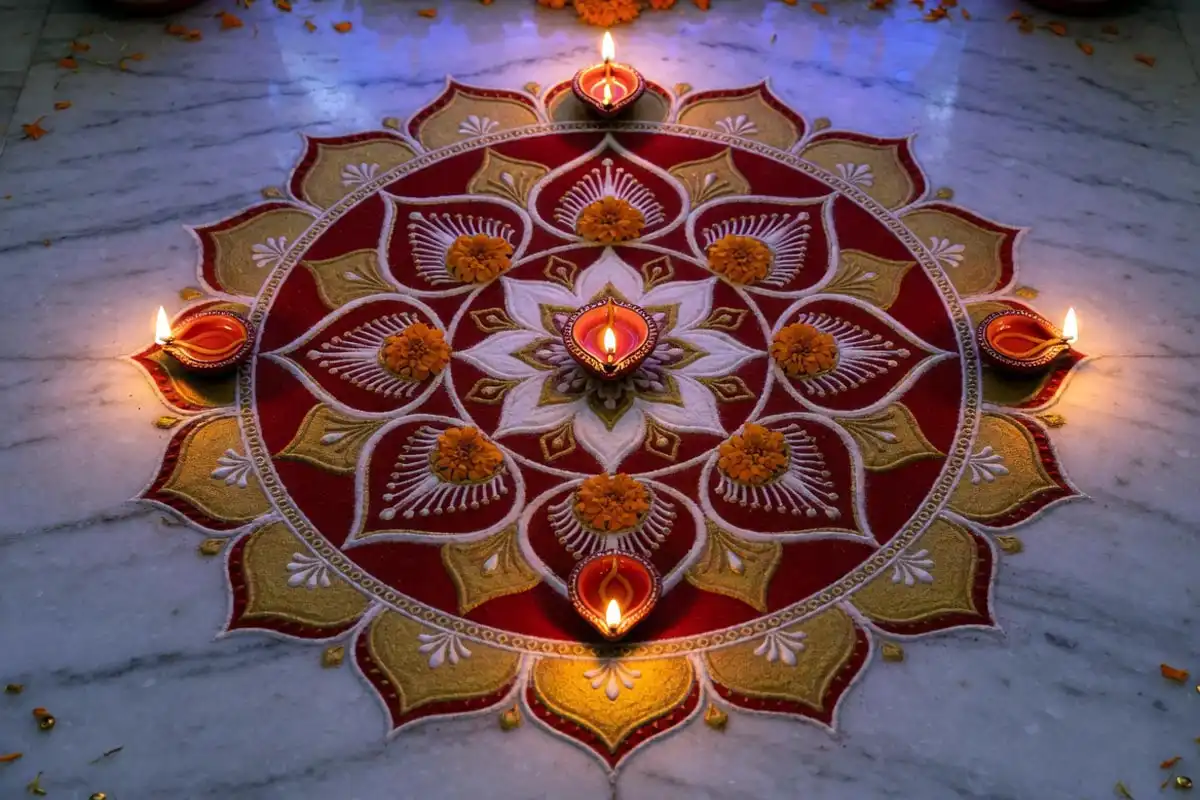
Mandala with Floating Lamps
A large geometric mandala with diyas placed at the corners and center. The pattern feels alive when lit in the evening.
Circle Rangoli
Circle rangoli starts with one round outline and builds patterns inward or outward from the edge. It feels balanced and calm. The shape suits any festival and any room.
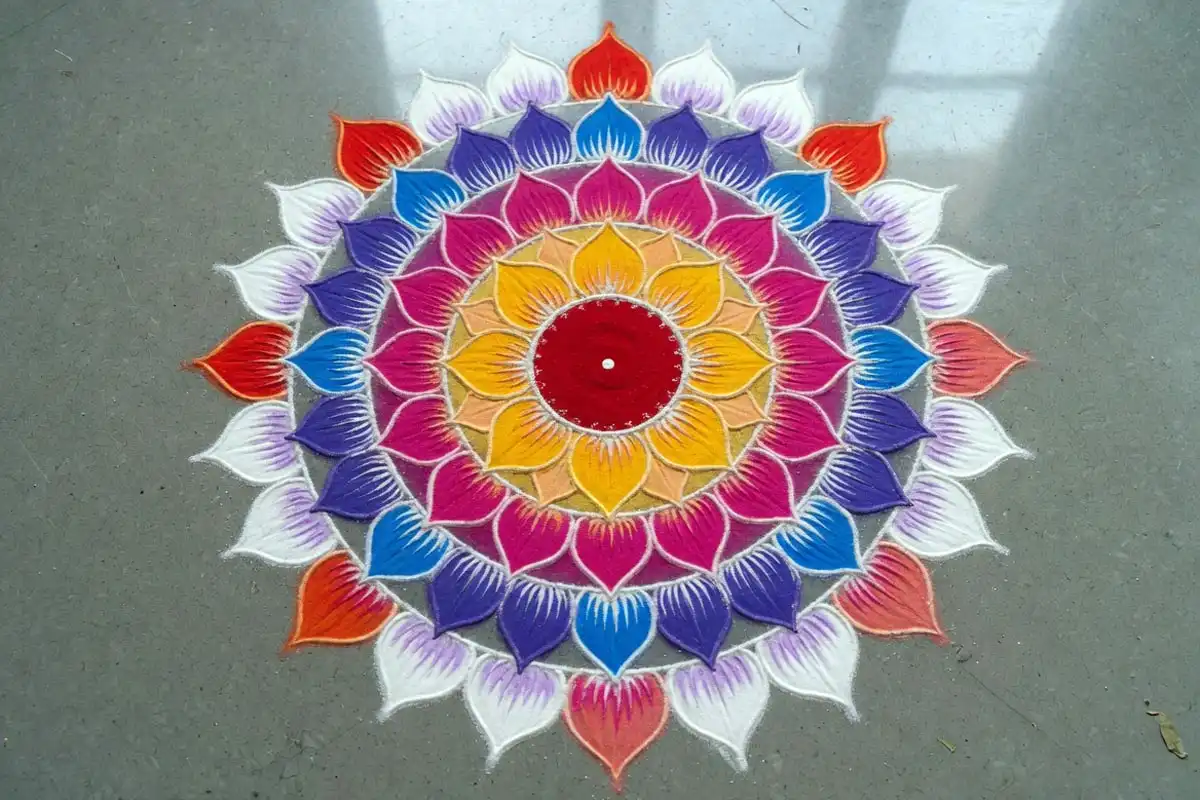
Mandala of Petals
Eight rings of petals open from a single center. Each ring uses a different color, from deep red at the heart to soft pink at the edge.
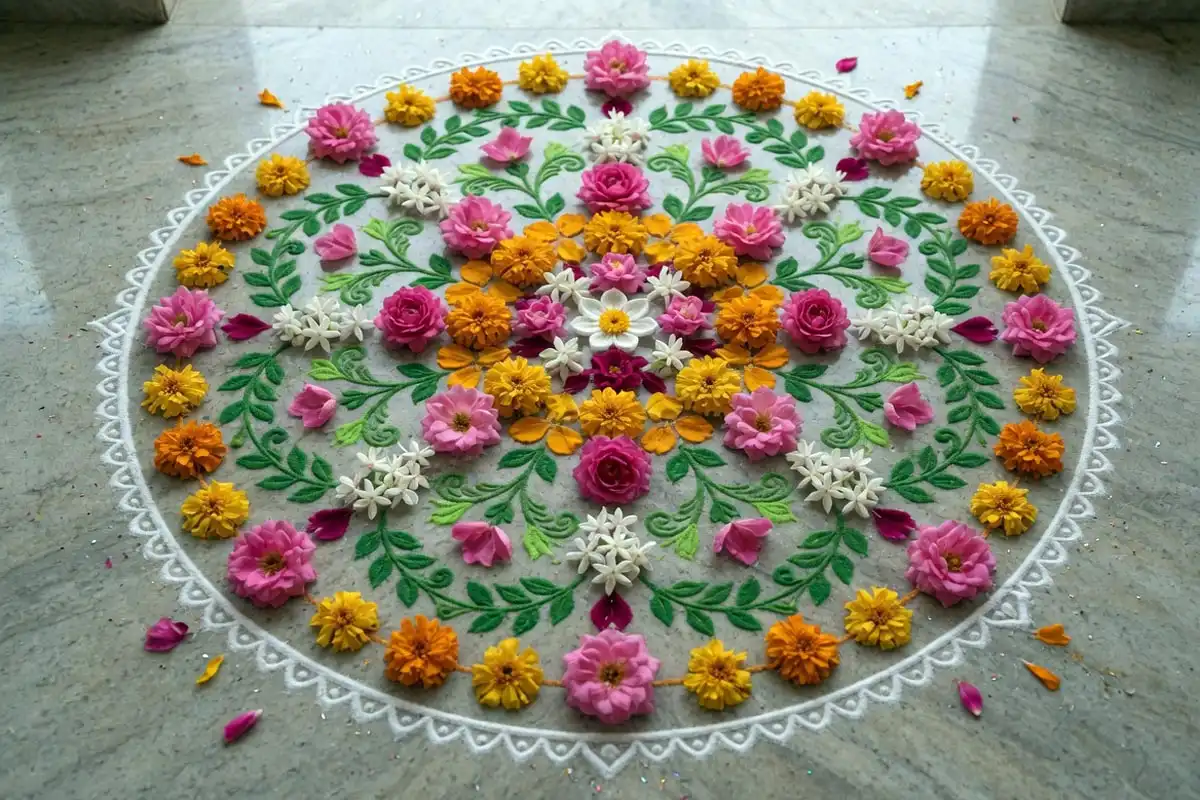
Big Circle Floral
A wide circle filled with flowers, vines, and leaves. Best for large entrances or open floor space at family events.
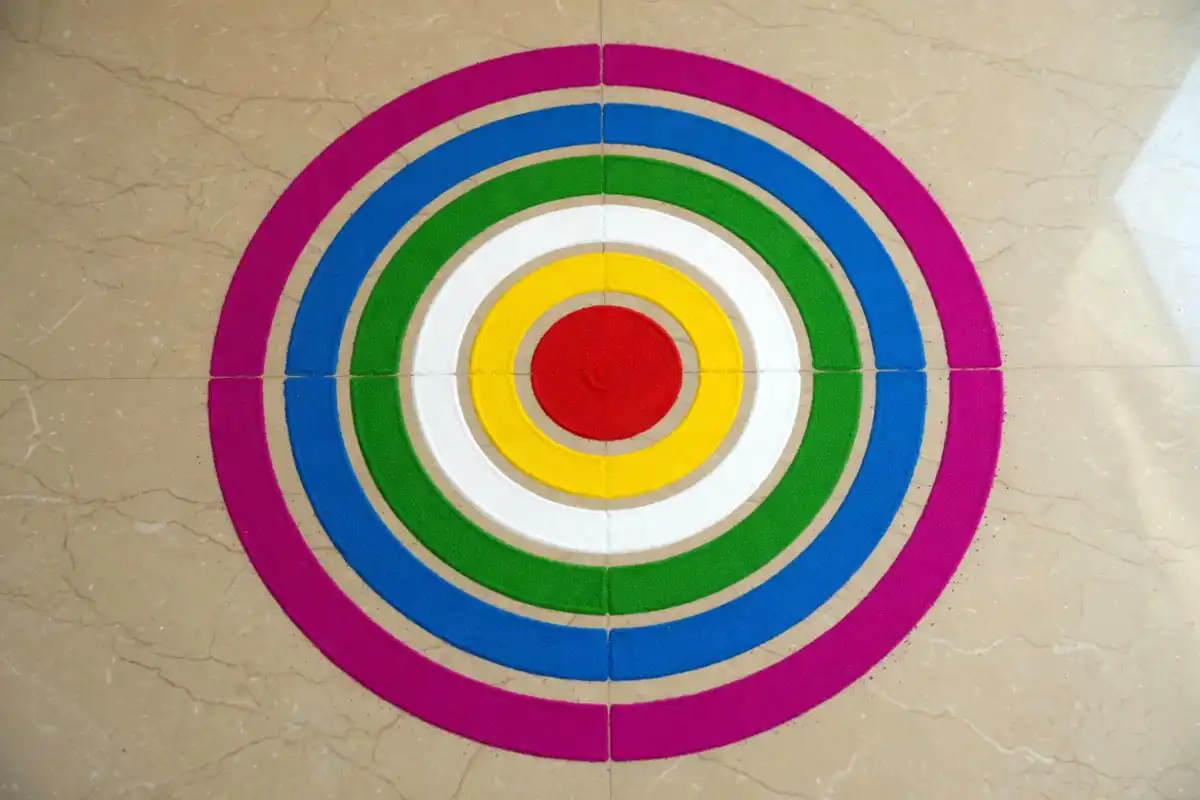
Concentric Color Bands
Rings of contrasting color, each thin and clean, form a target-like pattern. Quick to plan and easy to fix if a line goes off.
Border Rangoli
Border rangoli runs along the edge of a wall, threshold, or floor area. It frames the space rather than filling it. Useful for narrow doorways, stairs, and corridor entrances.
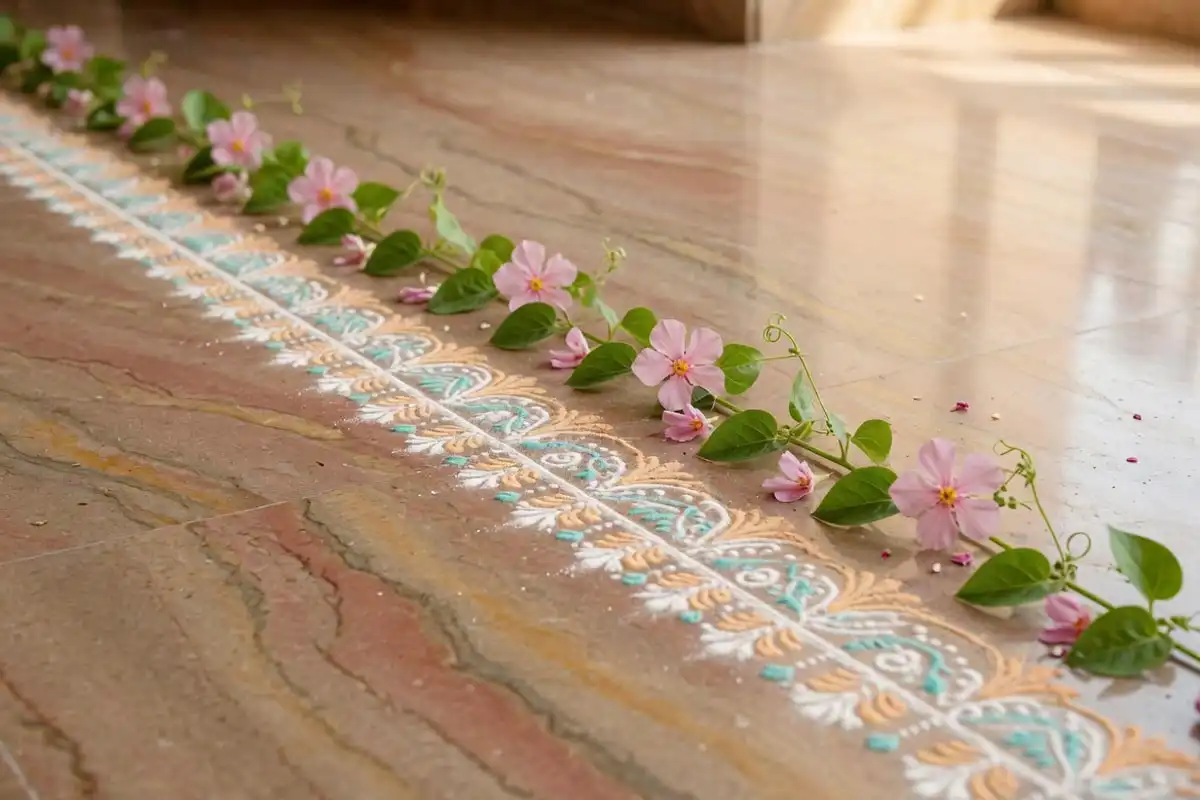
Vine and Flower Border
A trailing vine with small flowers runs along the floor edge. Green and pink throughout. Light, pretty, and quick to draw.
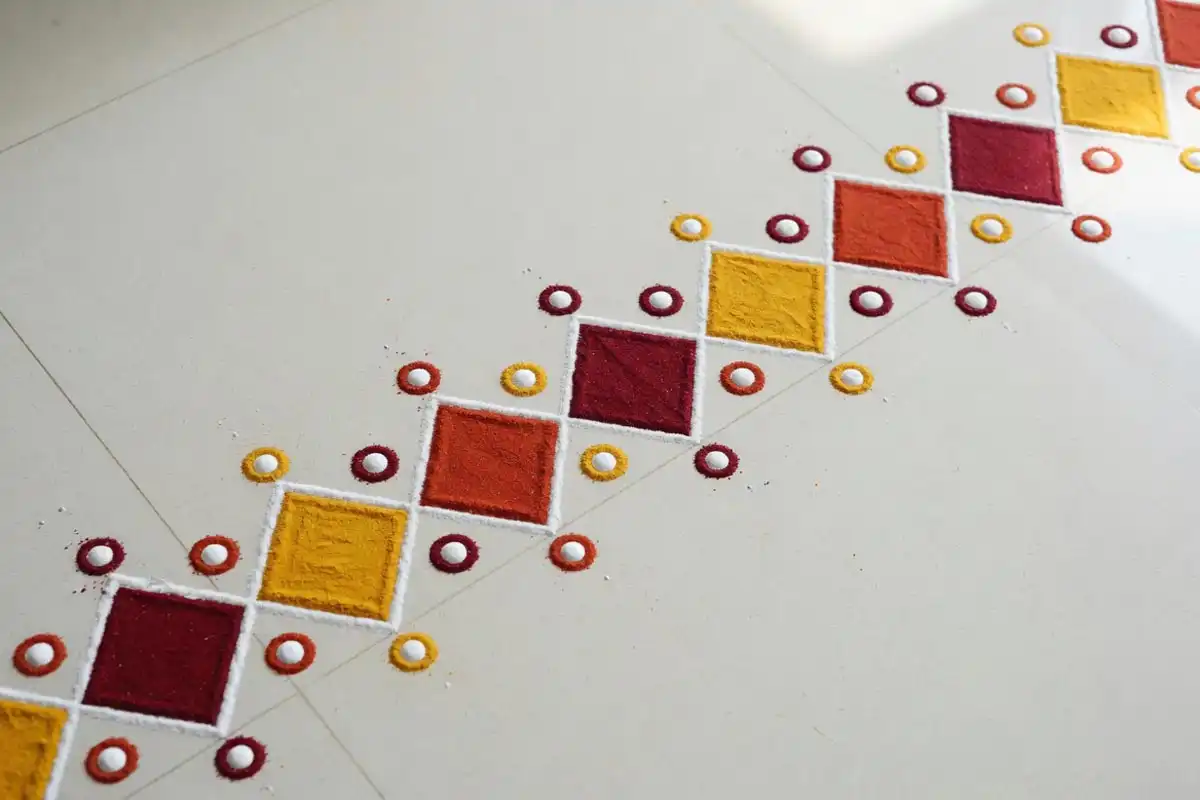
Geometric Border Strip
Diamonds and dots in a repeating chain. Strong contrast colors. Works well on tile and polished cement floors.
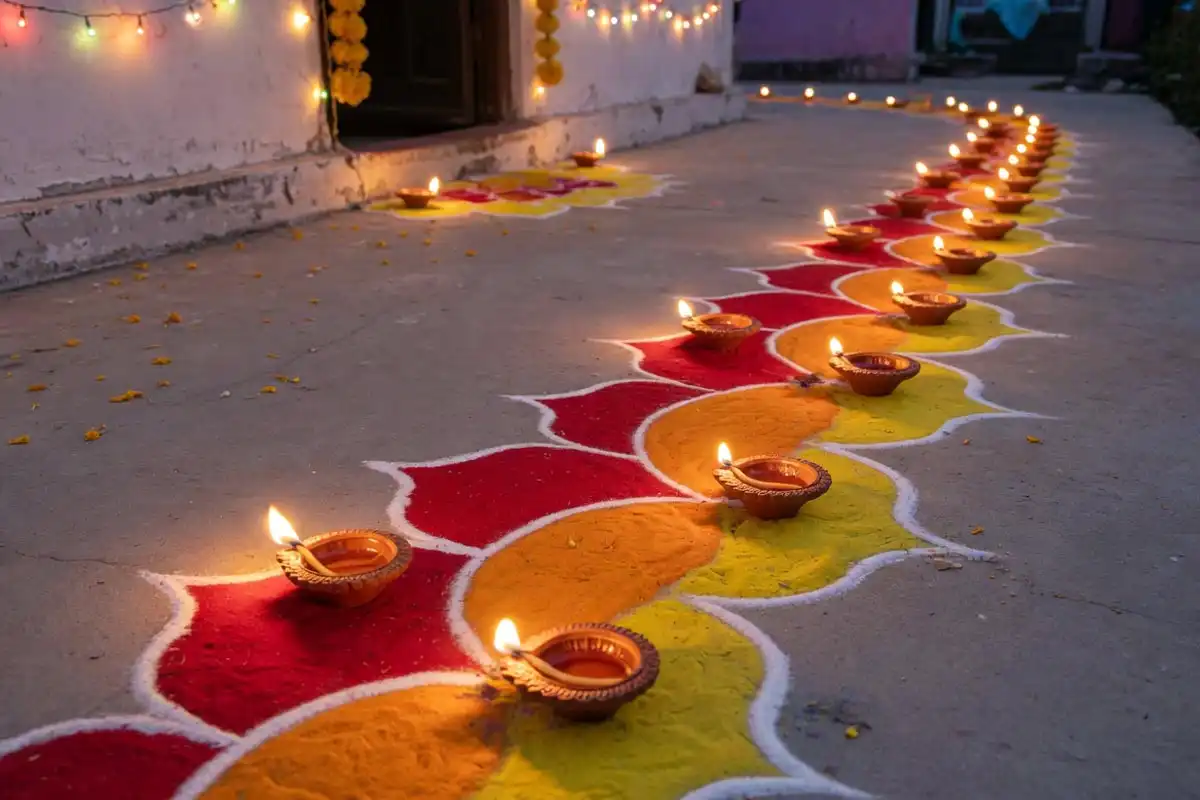
Lamp Border with Diyas
A line of curved petals with a diya placed at each curve. It lights the path during Diwali nights and looks warm in photos.
Simple Rangoli
Simple rangoli is small, fast, and ideal for daily use or first-time artists. The patterns are friendly to time-pressed mornings and limited floor space.
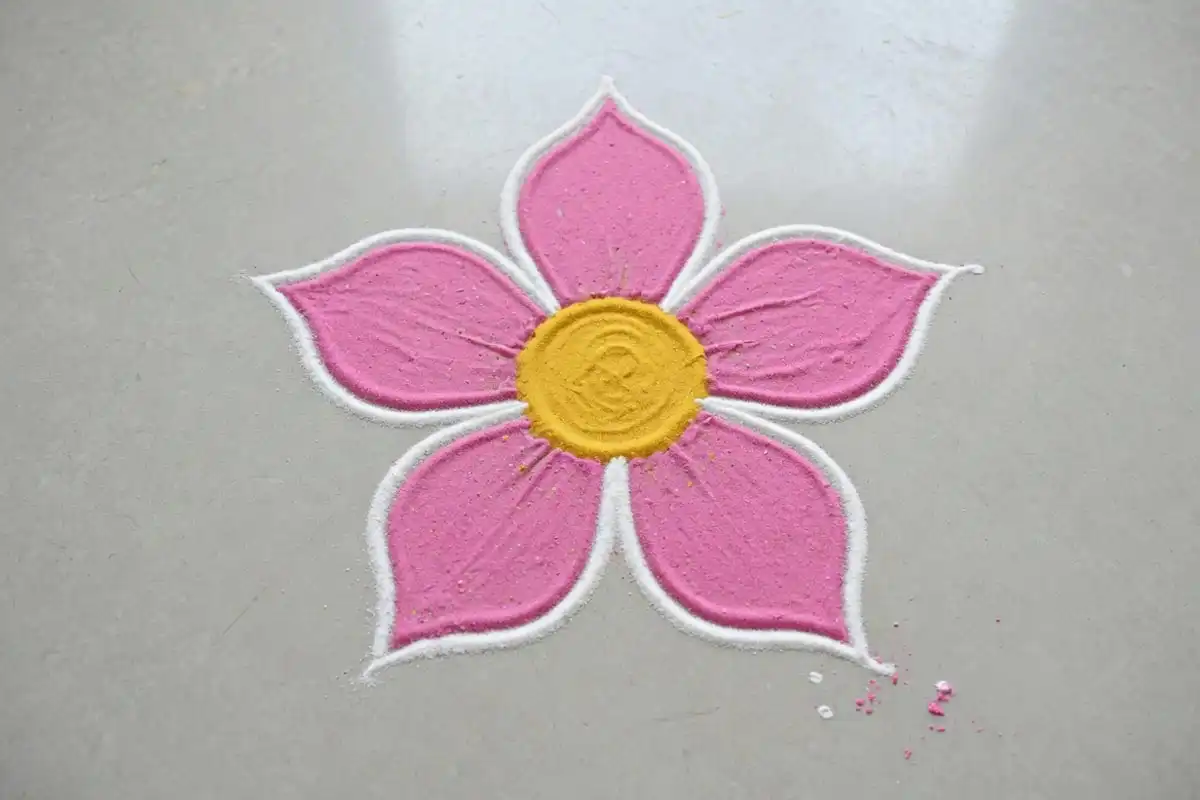
Five Petal Flower
A simple five-petal flower with a yellow center. Two colors. Five minutes to draw. Perfect for everyday prayer time.
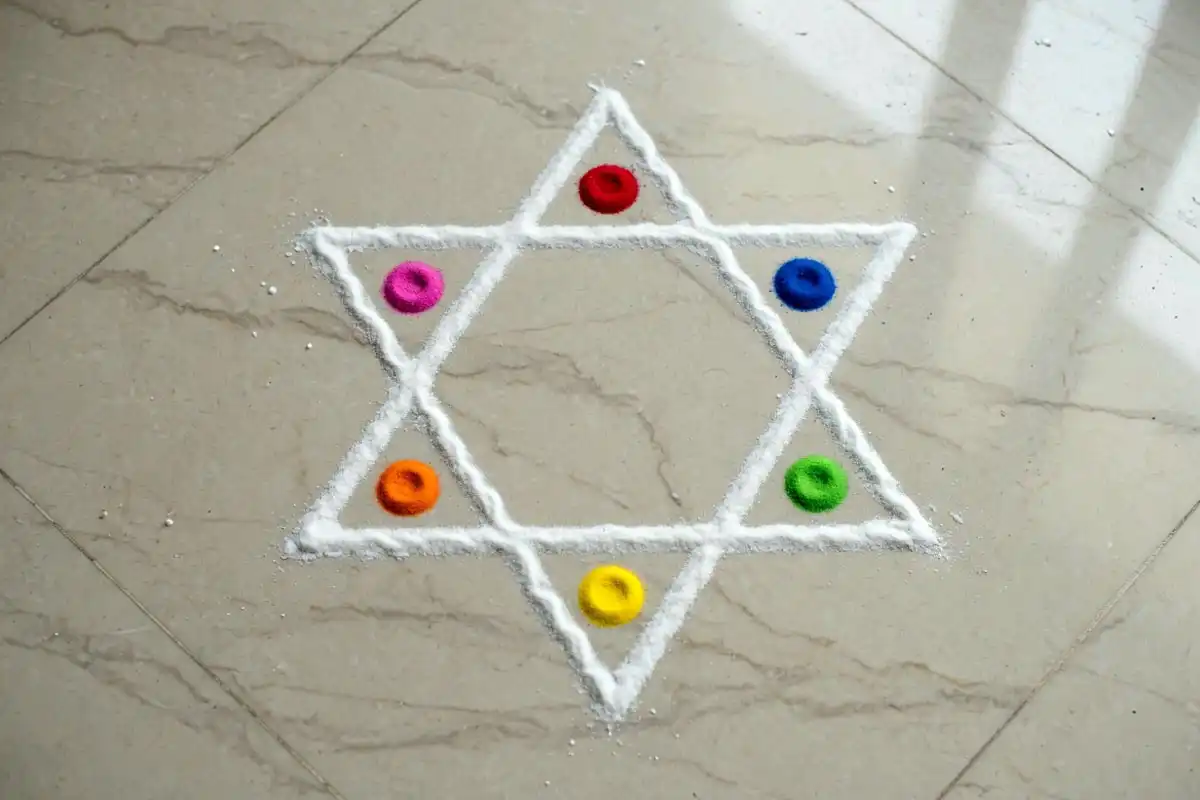
Star and Dot
A six-point star outlined in white with a colored dot in each point. Clean, balanced, and quick to finish.
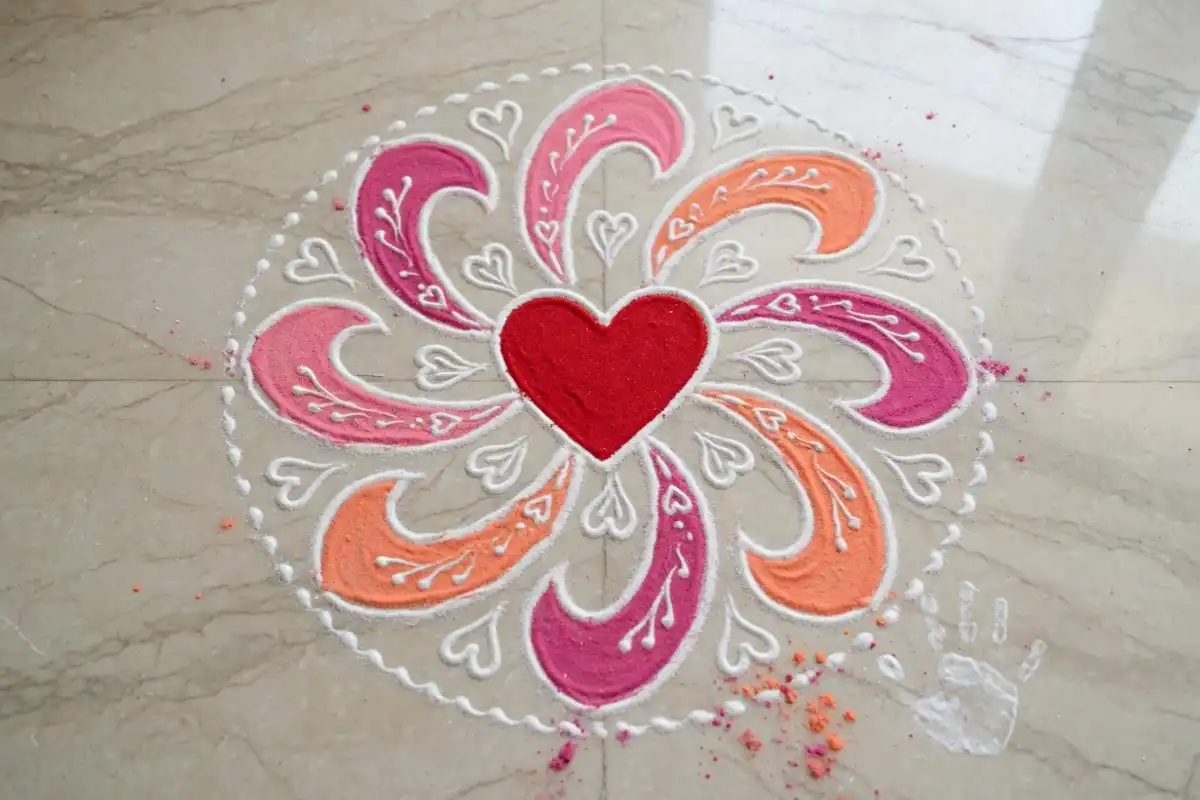
Heart Center Rangoli
A small heart at the center surrounded by petal lines. Children enjoy making this one too. A friendly first design.
How to Make a Rangoli Design
You do not need expensive tools or years of practice. With a clean floor, basic materials, and a clear plan, you can make a beautiful rangoli at home.
Materials You Will Need
- Rangoli colors (rice flour, colored sand, or dry pigment)
- White chalk for the outline
- Cotton cloth for cleaning small mistakes
- Stencils or a dot grid (optional, for beginners)
- Small bowl of water (if outlining wet)
- Diyas, flowers, or candles for decoration
-
1
Pick a Spot and Clean It
Choose a flat, dry area. The entrance, courtyard, or a clean tile floor works best. Wipe it down so the colors do not smudge.
-
2
Decide the Size and Shape
Measure your space. Decide if you want a circle, square, or freehand design. Mark the rough boundary with white chalk.
-
3
Draw the Outline
Use white chalk or a thin trail of white powder to sketch the main outline. Start at the center and work outward. Take your time with the lines.
-
4
Place Dots If Using a Grid
For dot-based or kolam designs, mark evenly spaced dots first. Use a measuring scale or count by eye. The grid is your guide.
-
5
Connect or Trace the Lines
Connect the dots with curves or lines, or trace your sketched outline. Keep your strokes steady. Mistakes can be brushed away gently.
-
6
Fill in the Colors
Pinch color between your thumb and index finger. Let it fall in a fine stream. Start from the center and move outward. Use one color at a time.
-
7
Add Outlines and Highlights
Once filled, outline the edges with a contrasting color, often white or deep red. This makes the design sharp and clear.
-
8
Add Final Touches
Place diyas, flower petals, or candles to finish. Light them in the evening for the full effect of the design.
Frequently Asked Questions
Quick answers to the most common questions about rangoli designs, materials, and traditions.
What is a rangoli design?
A rangoli design is a colorful floor pattern drawn in Indian homes using rice powder, colored sand, flower petals, or dry pigments. It is made to welcome guests and bring good fortune.
What materials are used for rangoli?
Common materials include rice flour, colored sand, dry pigments, chalk, flower petals, and rice grains. Some artists also use lentils, beans, and small leaves for added texture.
When is rangoli traditionally made?
Rangoli is drawn daily in many homes, fresh each morning. It is especially common during Diwali, Pongal, Onam, Dussehra, weddings, and family pujas.
What is the difference between rangoli and kolam?
Rangoli is the broader term used across India. Kolam is the Tamil Nadu version, usually made with rice flour on a dot grid, and tends to be more linear and white in color.
Is rangoli only made for Diwali?
No. Rangoli is part of many festivals and daily prayer. Diwali is just the most famous occasion because of the connection to Goddess Lakshmi and the use of diyas.
How long does a rangoli last?
Most rangoli is meant to be temporary. A dry powder rangoli lasts a day or two depending on foot traffic. Flower rangoli wilts within a few hours.
Can beginners make rangoli at home?
Yes. Start with small, simple geometric or dot designs. Keep the size to one or two feet across. With each attempt, your lines and color control improve.
What do the colors in rangoli mean?
Red stands for purity and strength, yellow for happiness, green for nature and growth, blue for divinity, and white for peace. Most designs balance several of these colors together.